

Bridging Tradition and Transformation: A Lauder Intercultural Venture in Oman and the UAE
October 24, 2025
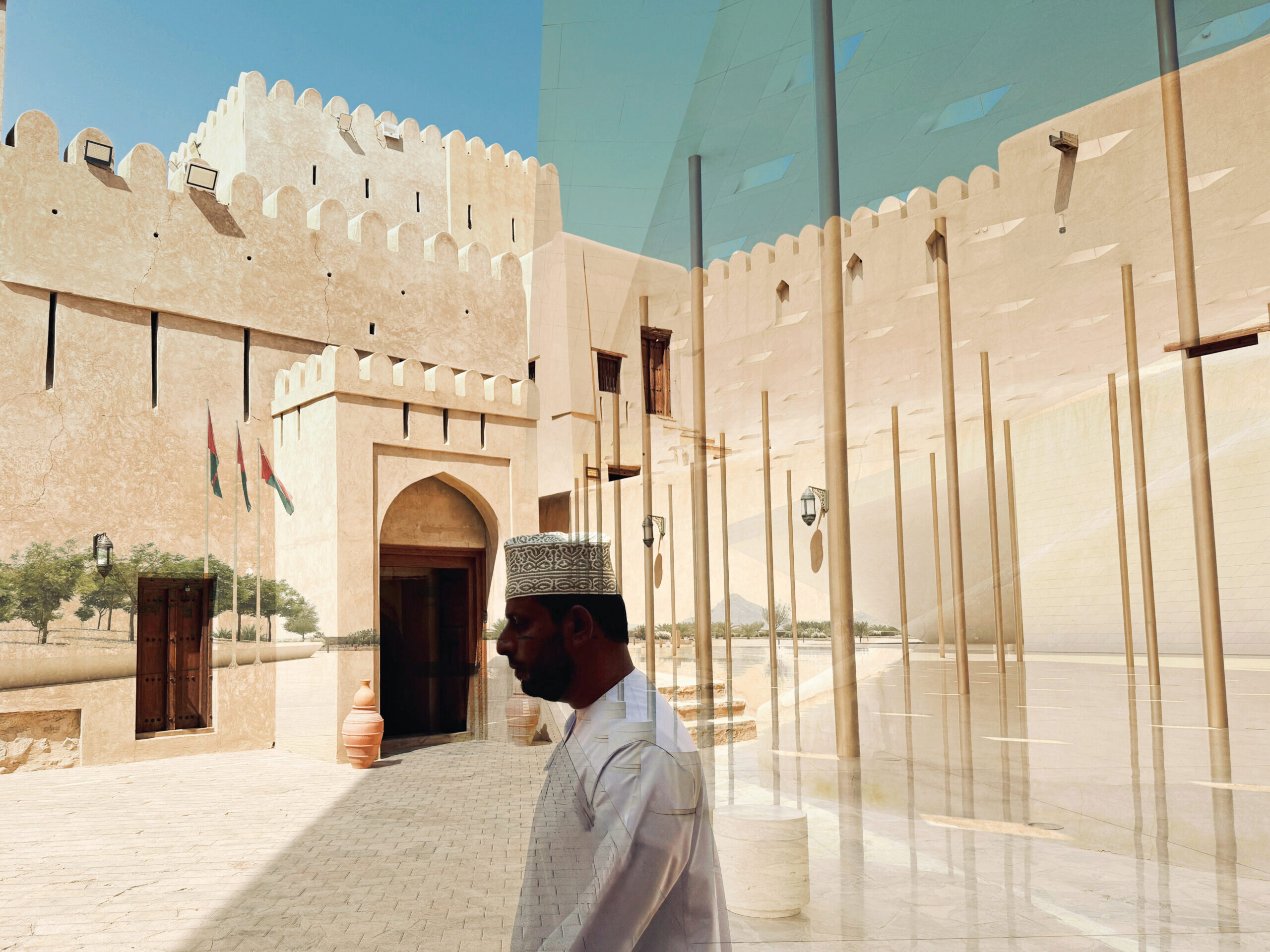
Over the October Fall Break, Lauder Institute students embarked on an immersive journey through Oman and the United Arab Emirates to examine how migration, innovation, and cultural memory shape urbanism in the Middle East and Gulf region. Guided by Professor Sudev Sheth, the Lauder Intercultural Venture (LIV) explored specifically how cities in Oman and the UAE navigate rapid modernization while preserving aspects of their history and heritage.
“This LIV was designed to help students see beyond skylines and infrastructure,” said Professor Sheth. “It’s about understanding how local communities and migrants from around the world transform spaces and spectacular architecture into meaningful, lived environments where technology, tradition, and aspiration meet.”
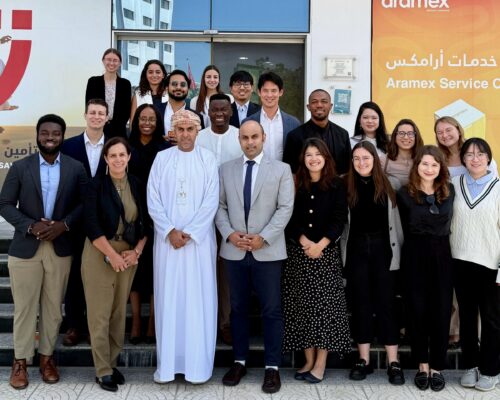

The journey began in Muscat, Oman, where participants met government and business leaders driving the nation’s growth strategy. At the Ministry of Housing and Urban Planning, officials outlined Oman’s model of measured urbanism—an approach that emphasizes cultural continuity, long-term planning, and community cohesion, and includes efforts to replace expatriate labor with trained Omani personnel.
Additional insights came from a visit with the CEO of Oman Airports Management Company, where students explored how a combination of state and private initiatives seek to catapult Muscat and cities across the country into hubs of technology, sustainable infrastructure, and gateways for trade and tourism.
A visit to Nizwa, once the capital of Oman, provided historical context. Students explored the Nizwa cattle market, the Old Town, and the Oman Across Ages Museum, which reflected the country’s roots in religious scholarship and tribal governance. Nizwa’s architectural and civic continuity offered a counterpoint to the more accelerated modernity found elsewhere in the Gulf.
The theme of continuity extended to Sur, the ancient port known for its traditional dhow shipyards. Here, artisans still handcraft wooden ships using centuries-old techniques. This visit illuminated the enduring legacy of Oman’s maritime heritage and its connection to the broader Indian Ocean trade network, including East Africa and South Asia.
Transitioning from Oman’s measured pace, the group journeyed across the desert toward Dubai, encountering a stark shift from heritage-driven planning to a data-centric, spectacle-oriented urban environment. The contrast between cities in Oman and Dubai offered a compelling lens through which to examine how two of the Lauder Institute’s key academic themes—data-driven societies and economic inclusion and development—are reflected in the region.


In Dubai, students visited the Museum of the Future, with its futuristic exhibits using cutting-edge design and innovative technology, and toured Dubai Creek and the Souks, an area that illuminated the pearl, spice, and textile trade foundations of Dubai’s globalism.
High-level meetings followed at Emaar Headquarters and Dubai Holding, where urban planners and architects shared insights into the city’s model of quasi-sovereign capitalism. Students learned how large-scale urban projects—from the Burj Khalifa to Dubai Marina—operate both as commercial ventures and as cultural symbols, and how the Emirate leverages capital for long-term diversification, sustainability, and competitiveness.
Participants also met with a prominent anthropologist and scholar of Dubai to discuss the city’s design philosophy and its human impact. Time spent in the Al Quoz Labor Community offered a striking counterpoint to the glitz, exposing the often-unseen social and economic networks that sustain Dubai’s cityscape.
This was the Lauder Institute’s first LIV to Oman and the UAE.

The Lauder Intercultural Ventures (LIV) program is a distinctive and required component of the Institute’s Master’s in International Studies degree. It combines academic insights from expert faculty with immersive, on-the-ground learning experiences abroad. Through LIVs, students develop the skills to analyze and address complex social, economic, and cultural challenges—preparing them to become thoughtful, globally minded business leaders. Learn more: lauder.wharton.upenn.edu/immersion/livs
Story by Lauren Treutler
Photos courtesy of Sudev Sheth and Mili Lozada-Cerna