

The Lauder Institute hosted the inaugural Global Futures Symposium (GFS): National Security Meets the Global Marketplace on February 19-20, 2026 in Philadelphia, PA. We held conversations about the intersection of national security and global business with practitioners, scholars, policymakers, and industry leaders.
We also launched a new partnership with Cultivate Labs in concert with GFS. Stay tuned for the results of our first forecasting activity and details on how you can continue participating.
DAY 1: THURSDAY, FEBRUARY 19 | UNIVERSITY OF PENNSYLVANIA
Huntsman Hall (8th Floor)
1:00 – 2:00 p.m. | Registration
2:00 – 2:30 p.m. | Welcome
2:30 – 3:30 p.m. | Keynote Address: Tarun Chhabra (Head of National Security Policy, Anthropic)
3:45 – 5:00 p.m. | Roundtable: Trump & the Future of Global Power
5:15 – 6:15 p.m. | Reception
DAY 2: FRIDAY, FEBRUARY 20 | SOFITEL PHILADELPHIA
Sofitel Philadelphia at Rittenhouse Square (3rd Floor)
7:30 – 8:00 a.m. | Registration
8:00 – 9:00 a.m. | Continental Breakfast
9:00 – 9:10 a.m. | Welcome
9:15 a.m. – 10:30 a.m. | Bridging the “Valleys of Death:” Public-Private Partnerships in National Security Innovation
10:45 a.m. – 12:00 p.m. | Securing or Slowing the Economy: Navigating Global Investment Controls
12:00 – 1:15 p.m. | Lunch
1:20 – 2:35 p.m. | Resource Nationalism: The Global South Takes Control
2:55 – 4:10 p.m. | Democracy in Disarray: Misinformation, Machine Intelligence & Money
4:15 – 4:35 p.m. | Closing
4:45 – 5:45 p.m. | Reception
*Attendance on Friday, February 20th is limited. We encourage early registration to secure your spot. GFS will be fully in person and conducted under Chatham House Rule.
FEATURED KEYNOTE SPEAKER
Tarun Chhabra
Head of National Security Policy, Anthropic | Former Deputy Assistant to the President & Coordinator for Technology and National Security, U.S. National Security Council

Tarun Chhabra is head of national security policy at Anthropic. He previously served as deputy assistant to the president and coordinator for technology and national security on the U.S. National Security Council (NSC). From 2021 to 2025, Chhabra coordinated U.S. strategies for technology competition with the People’s Republic of China and technology partnerships with U.S. allies and partners, particularly with respect to artificial intelligence, semiconductors, advanced biotechnologies, and quantum information science.
Chhabra led the development of U.S. policy on export controls, industrial strategies, inbound and outbound investment controls, data security, and information and communication technology and services restrictions. He also spearheaded U.S. diplomacy on these matters with the Five Eyes, Japan, South Korea, India, the EU, and other countries. He previously served as a director of strategic planning at the NSC, speechwriter to the secretary of defense, senior fellow at Georgetown’s Center for Security and Emerging Technology, and director of the Project on International Order and Strategy at the Brookings Institution. He holds a JD from Harvard (Paul and Daisy Soros Fellow), an MPhil from Oxford (Marshall Scholar), and a BA from Stanford.
Trump & the Future of Global Power
Distinguished Speaker Roundtable

Dr. Thomas Wright
Senior Fellow, Strobe Talbott Center for Strategy, Security, and Technology, The Brookings InstitutionMORE
Thomas Wright is a senior fellow at the Strobe Talbott Center for Strategy, Security, and Technology at the Brookings Institution and a contributing writer for The Atlantic. He previously served as senior director for strategic planning at the National Security Council during the Biden administration. He is the author of All Measures Short of War and coauthor, with Colin Kahl, of Aftershocks: Pandemic Politics and the End of the Old International Order.
Dr. Barry R. Posen
Ford International Professor of Political Science, MITMORE
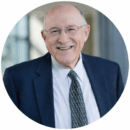
Barry R. Posen is Ford International Professor of Political Science at MIT, former Director of the MIT Security Studies Program, and serves on the Executive Committee of Seminar XXI. He is the author of Restraint: A New Foundation for U.S. Grand Strategy, (Cornell University Press 2014), Inadvertent Escalation: Conventional War and Nuclear Risks (Cornell University Press 1991), and The Sources of Military Doctrine (Cornell University Press 1984). The latter won two awards: The American Political Science Association’s Woodrow Wilson Foundation Book Award, and Ohio State University’s Edward J. Furniss Jr. Book Award. He is also the author of numerous articles, including “The Devastation of Gaza Was Inevitable,” Foreign Policy, Feb. 14, 2024; “Ukraine has a Breakthrough Problem,” Foreign Policy, Aug. 3, 2023; “Russia’s Rebound: How Moscow has partly recovered from its military setbacks,” Jan. 4, 2023; “Ukraine’s Implausible Theories of Victory: The Fantasy of Russian Defeat and the Case for Diplomacy,” Foreign Affairs, July 2022; “Europe Can Defend Itself,” Survival, December 2020; “The Rise of Illiberal Hegemony–Trump’s Surprising Grand Strategy,” Foreign Affairs, March/April 2018; “It’s Time to Make Afghanistan Someone Else’s Problem,” The Atlantic, 2017; “Contain ISIS,” The Atlantic, 2015, “Pull Back: The Case for a Less Activist Foreign Policy,” Foreign Affairs, January/February 2013; and “Command of the Commons: The Military Foundation of U.S. Hegemony,” International Security, Summer, 2003. He is a Fellow of the American Academy of Arts and Sciences. In 2016 he was appointed Henry A. Kissinger Chair in Foreign Policy and International Relations at the Library of Congress, John W. Kluge Center. He is the 2017 recipient of the International Security Studies Section (ISSS), International Studies Association, Distinguished Scholar Award, and in 2019 received the Notre Dame International Security Center’s Lifetime Achievement Award.
He has been a Council on Foreign Relations International Affairs Fellow; Rockefeller Foundation International Affairs Fellow; Guest Scholar at the Center for Strategic and International Studies; Woodrow Wilson Center Fellow, Smithsonian Institution; Transatlantic Fellow of the German Marshall Fund of the United States; and a Visiting Fellow at the John Sloan Dickey Center at Dartmouth College.

Dr. Ronald J. Granieri (Moderator)
Professor of History and Chair, Department of National Security and Strategy, U.S. Army War CollegeMORE
Dr. Ronald J. Granieri is Professor of History and Chair in the Department of National Security and Strategy at the United States Army War College and a Senior Fellow at FPRI. A graduate of Harvard and the University of Chicago, he has published on German History; European-American Relations; the Cold War; and contemporary politics and culture. He is the author of The Ambivalent Alliance: Konrad Adenauer, the CDU/CSU, and the West, 1949-1966 (Berghahn, 2003); co-editor of The Bondian Cold War: Global Connections of a Cold War Icon (Routledge 2023) and most recently of Adenauer’s Heirs: The CDU/CSU from Detente to Reunification (Oxford UP, 2025). All opinions are his own and not those of the U.S. Army War College, the U.S. Army, or the Department of War.

Dr. Patricia Kim
Fellow, John L. Thornton China Center & Center for Asia Policy Studies, The Brookings InstitutionMORE
Dr. Patricia M. Kim is a leading expert on Chinese foreign policy, U.S.–China relations, and East Asian politics and security. She is a fellow with a joint appointment to the John L. Thornton China Center and the Center for East Asia Policy Studies at the Brookings Institution, and the author of No Constraints: China’s Global Quest for Partners and Influence, forthcoming from Princeton University Press in fall 2026. At Brookings, she co-leads the Global China Project, a signature initiative of the Foreign Policy program focused on producing rigorous, policy-relevant analysis of China’s global strategy and its implications for the United States and the international order.
Dr. Kim previously served as a senior China specialist at the U.S. Institute of Peace, where she led analytical work on U.S.–China strategic stability and directed a major research effort on China’s expanding influence across Africa and the Middle East. She has held fellowships at the Council on Foreign Relations, Harvard Kennedy School’s Belfer Center for Science and International Affairs, and Princeton University.
Dr. Kim regularly briefs senior U.S. government officials and has provided expert testimony to the House Intelligence Committee and the House Foreign Affairs Subcommittee on Terrorism, Nonproliferation, and Trade. Her writing and analysis have appeared widely in leading policy journals and major international media outlets.
She holds a Ph.D. in politics from Princeton University and a B.A., with highest distinction, in political science and Asian studies from the University of California, Berkeley. Dr. Kim is a member of the National Committee on U.S.–China Relations and a non-resident fellow at the Paul Tsai China Center at Yale Law School.

Dr. Oliver Stuenkel
Senior Fellow, Carnegie Endowment for International Peace | Professor of International Relations, Getulio Vargas FoundationMORE
Oliver Stuenkel is a senior fellow affiliated with the Democracy, Conflict, and Governance Program at the Carnegie Endowment for International Peace. He is also a Fellow at the Belfer Center at the Harvard Kennedy School and an associate professor at the School of International Relations at Fundação Getulio Vargas (FGV) in São Paulo, Brazil.
His research focuses on geopolitics and the global order, emerging powers, Brazilian foreign policy and Latin American politics and democracy. He is the author of several books on geopolitics, including The BRICS and the Future of Global Order and The Post-Western World, which have been translated into multiple languages. He is also a columnist for Foreign Policy and O Estado de S. Paulo, a commentator on Brazilian television and radio, and one of Latin America’s leading foreign policy analysts.
His articles have been published in major international relations journals, including International Affairs, Global Governance, Oxford Review of Economic Policy, Global R2P, and Conflict, Security and Development. He has also written for Foreign Affairs, The New York Times, Financial Times, Global Times, Mail & Guardian, Times of India, The Hindu, Folha de S. Paulo, Valor Econômico, and O Globo. From 2016 to 2021, he was a columnist for El País.
He has been a visiting professor at the University of São Paulo, the School of International Studies at Jawaharlal Nehru University (JNU) in New Delhi, and the Libera Università Internazionale degli Studi Sociali Guido Carli (LUISS) in Rome. Oliver holds a bachelor’s degree from the University of Valencia in Spain, a master’s in Public Policy from the Harvard Kennedy School, and a Ph.D. in Political Science from the University of Duisburg-Essen in Germany. Oliver speaks Portuguese, Spanish, English, German, and French. He lives in Washington, DC.
Bridging the “Valleys of Death:” Public-Private Partnerships in National Security Innovation
Panel

Bryan Mabry
Partner, New North Ventures
Andrew DeBerry
President, Arimathea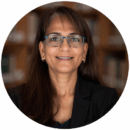
Sheetal Patel
CEO, Shadowline Consulting | Venture Partner, New North Ventures
Lee Garber
General Partner, NewSpring
Dr. Regina Abrami (Moderator)
Faculty Director, Strategic Initiatives, Lauder InstituteSecuring or Slowing the Economy: Navigating Global Investment Controls
Panel

Neil Thomas
Fellow, Center for China Analysis, Asia Society
Hon. Nevena Simidjiyska
Partner & Chair of the CFIUS and National Security Group, Fox Rothschild LLP
Dillon Martinson
Partner, Cooley LLP
Hon. Nazak Nikakhtar
Partner, Wiley ReinDr. Regina Abrami (Moderator)
Faculty Director, Strategic Initiatives, Lauder InstituteResource Nationalism: The Global South Takes Control
Panel

Dr. Cullen Hendrix
Senior Fellow, Peterson Institute for International Economics
Dr. Juliana González Jáuregui
Principal Researcher, Latin American Faculty of Social Sciences | Adjunct Researcher, Argentina’s National Scientific and Technical Research Council
Oscar Leandro
Vice President of Corporate Development, Nano Nuclear Energy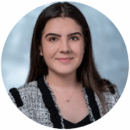
Zoe Oysul
Senior Policy Analyst, Center for Critical Minerals Strategy, SAFE
Marie Harf (Moderator)
Executive Director, Perry World HouseDemocracy in Disarray: Misinformation, Machine Intelligence & Money
Panel

Dr. Kenton Thibaut
Senior Resident China Fellow, Atlantic Council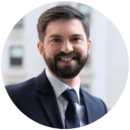
Tim Harper
Lead, Elections and Democracy, Center for Democracy and Technology
Dr. Ivana Stradner
Research Fellow, Foundation for Defense of Democracies
Alex Engler
Executive Director, Penn Center on Media, Technology, and Democracy
Dr. Ecaterina Locoman (Moderator)
Senior Lecturer, Lauder Institute & Department of Political Science, University of PennsylvaniaIntroducing Cultivate Labs
Cultivate Labs is a crowdcasting platform that invites participants to submit geopolitical forecasts and benchmarks them against other users on an anonymous leaderboard. This partnership supports the Lauder Institute’s commitment to constructive disagreement, analytical rigor, and critical decision-making in response to today’s most pressing—and complex—geopolitical issues.